EPISODE
68
Scaling With Micro-Influencers: Lessons From Goorin’s Ambassador Strategy With Nicky Cutler
with
Nicky Cutler, B2B Marketing Manager at Goorin Bros.
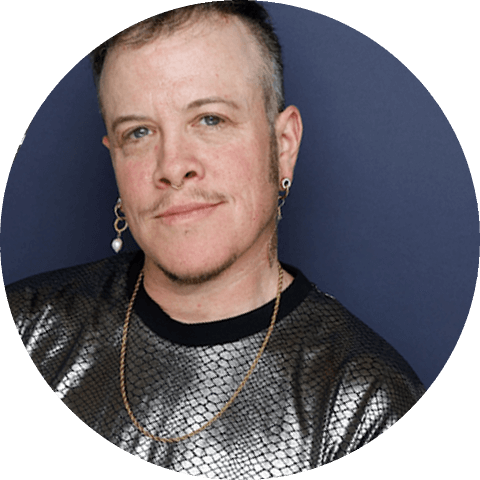

Nicky Cutler is the B2B Marketing Manager at Goorin Bros., a premium hat and apparel company known for its cult-favorite line of trucker hats featuring embroidered animal patches. A seasoned marketer, Nicky led Goorin’s to over $1 million in affiliate revenue in two years by building and scaling Goorin’s ambassador and influencer programs. He previously worked across sales and retail leadership at Goorin and also launched his fashion brand earlier in his career. Blending brand building, community storytelling, and retail insight, he’s become known for driving culture-first marketing strategies that resonate in the fashion world.


Here’s a glimpse of what you’ll learn:
- [2:19] Nicky Cutler clarifies what a brand ambassador program entails and how Goorin Bros. defines different ambassador types
- [3:58] How Goorin identifies and recruits ambassadors from an already active fan base
- [5:49] Common mistakes with referral codes and how discount overuse impacts margins
- [8:38] Why Goorin shut down its first ambassador program after internal conflict
- [10:57] Launching a new rewards-based content program to motivate authentic brand fans
- [14:26] Why ambassador strategies must be tested and adapted to each brand’s unique audience
In this episode…
Many brands try to launch ambassador programs only to discover that discount-driven strategies attract the wrong participants, fail to generate new customers, and create tension among community members. With rising competition for attention and the growing need for authentic social proof, the challenge becomes clear — how do you build an ambassador engine that converts, sustains engagement, and avoids turning into a chaotic or unprofitable program?
For Nicky Cutler, a specialist in B2B marketing and community-driven brand building, success lies in leaning into genuine customer enthusiasm rather than follower counts. Nicky shares how he initially tapped into an eager fan base, leveraged referral codes, and later recognized pitfalls such as repeat purchasers misusing discounts and ambassadors competing against one another. He outlines practical strategies for structuring guidelines, limiting code usage, and transitioning toward a reward-based system that motivates creators through exclusive products and achievable milestones. Nicky’s approach prioritizes testing multiple program designs and focusing on authentic customers who truly represent the brand.
In this episode of Minds of Ecommerce, Raphael Paulin-Daigle interviews Nicky Cutler, B2B Marketing Manager at Goorin Bros., about building a high-converting ambassador program through relatable content. Nicky discusses the power of fan-led recruiting, the risks of discount dependency, and why reward-based content systems uncover authentic creators. He also explores program design, community management, and strategies for long-term scalability.
Resources mentioned in this episode:
- Raphael Paulin-Daigle: LinkedIn | X
- SplitBase
- Nicky Cutler on LinkedIn
- Goorin Bros.: Website | Instagram | Facebook | TikTok
- Goorin Drops
- TikTok Shop
- Social Strudel
Quotable Moments:
- “I think that brand ambassadors can be defined as fans of your particular brand that want to get involved.”
- “You don't want to get pigeonholed into a discount brand, right?”
- “We needed to find ways of working with the people that wanted to work with us."
- "And so essentially they get your product, and they have to put up a video."
- "I want to focus on, really, the brand ambassadors, the influencers, the culture creators of your particular brand."
Action Steps:
- Start by recruiting true fans of your brand: This creates more authentic, relatable content that converts better than traditional influencer outreach.
- Set clear ambassador guidelines early: Establishing expectations prevents conflict, protects brand culture, and keeps participants aligned on behavior.
- Use one-time or new-customer-only discount codes: This avoids margin erosion caused by repeat buyers cycling through the same ambassador codes.
- Introduce rewards-based content programs: Reward systems motivate broader participation and spotlight the customers who naturally generate high-engagement content.
- Test and evolve your ambassador strategy continuously: Programs must be refined as the brand grows to maintain relevance, effectiveness, and community health.
Sponsor for this episode…
This episode is brought to you by SplitBase.
At SplitBase, we design, test, and manage high-converting landing pages and on-site experiences for fashion, luxury, and lifestyle ecommerce brands. Our optimization program pinpoints exactly where your store is losing money most, and then we help you fix that.
The result? Increased conversions and profits for our clients.
With our team of conversion optimization specialists, performance marketers, and conversion-focused designers, we've got your back when it comes to testing and optimization.
Request a proposal on SplitBase.com today, and learn how we can help you get the most out of your marketing spend.
You can find us on LinkedIn, Twitter, and Facebook. Don’t miss out on our exclusive podcasts at Minds of Ecommerce.
Episode Transcript
Intro: 00:06
Welcome to the Minds of Ecommerce podcast, where you'll learn one key strategy that made leading ecommerce companies grow exponentially. We cut the bullshit and keep the meat in a 15-minute episode. Founders and executives take us through a deep dive of a strategy, so you get to learn and grow your online sales today. Get ready. Nicky Cutler is the brand and culture, and B2B marketing manager at Goorin.
And today we'll be talking about how to build an ambassador program that uses relatable content to attract and convert customers. The dos, the don'ts, the mistakes, and how to succeed. I'm your host, Raphael Paulin-Daigle, and I'm the founder of SplitBase. This is Minds of Ecommerce. Now this episode is brought to you by SplitBase.
At SplitBase, we help leading eight and nine-figure brands such as Dr. Squatch, Hyperice, and grow through customer-focused conversion optimization programs. We'll look at your ecommerce funnel. We pinpoint exactly where it's leaking. And then, well, we help you fix it. The result is an increase in add to carts, an increase in conversions, a higher AOV, and of course, well then you get more money, which in turn, allows you to scale advertising profitably. We've been at it for over a decade and can help you manage the entire process from A to Z. So if you need help with conversion optimization, go to pbase.com today to learn about how we can help you get the most out of your marketing spend. All right, Nicky, welcome to the show. Thank you so much for being here.
Nicky Cutler: 01:40
Thanks for having me. Happy to be here.
Raphael Paulin Daigle: 01:43
Yeah. Now, as you know, this podcast is all about going deep and dissecting one key growth strategy so our listeners can really get as much value as possible right away. Now you've, you know, been knee deep when it comes to ambassador programs. And you guys have seen quite a bit of success with that as well. So I'd love to dissect that, see what's worked, what maybe hasn't, but maybe just to provide our audience a bit of context, could you tell us a bit more about how you define the Ambassador program? How does it work at Goorin?
Nicky Cutler: 02:19
Yeah, that's a really good question. I think that brand ambassadors can be defined as fans of your particular brand that want to get involved on really any level. So it could be somebody that doesn't have a lot of followers but has bought a lot of your product. It could be an influencer type person that wants to start out with your brand as a brand ambassador and create a relationship and move forward into perhaps a higher tier in paid ambassadorship. And it really even could include Bigger.
Bigger. What am I going to say? I haven't done this particular brand ambassador program for a while, but it's almost like associations that spread your reach to particular lists. I don't want to focus on those today. I want to focus.
As you can see, I've even forgotten about them. I want to focus on really, the brand ambassadors, the influencers, the culture creators of your particular brand. Great. So yeah.
Raphael Paulin-Daigle: 03:34
Awesome. Well, let's dive into it. I think my first question is there are different types of brand ambassadors and influencers than that you can recruit in such a program. Where do you start? Like in your case, who is that influencer or ambassador?
How do you find them? What's the process?
Nicky Cutler: 03:58
Luckily enough, Goorin has a very big fan base and so I didn't have to move anywhere. They were writing right into the DMs that they wanted to get involved with the brand. So after becoming social media manager, essentially in 2020, the pandemic really created a whole new market of pivoting left and right to be able to get your brand to either be noticed by people that are now staying at home. To be culturally, culturally relevant, hitting your particular people and also like no one had time space to do photo shoots they didn't have, they didn't have on site things any longer. So you needed to really push out the product to all these different people in order to create content and have it go online.
And that was like a huge boom. And so we really needed to do a number of things. We needed to find ways of working with the people that wanted to work with us, and we needed to, like, find a place for other people to really put all of their energy to help the brand grow. And they may not necessarily be paid. So incoming. We started with a referral. It's an affiliate platform.
Raphael Paulin-Daigle: 05:22
Okay.
Nicky Cutler: 05:22
This is 2020. And so we basically were able to outreach to the people that wanted to work with our brand and give them the potential of basically sending out codes to their particular friends and followers to learn more about the brand, to show the brand and to actually make a commission, and then in turn, create more fans of the brand and have that spread, spread, spread.
Raphael Paulin-Daigle: 05:49
Awesome. Now, what are the mistakes? Like, I think here, you know, I think a lot of people can listen to this and say, okay, well, let's just find influencers that kind of fit our demographic and let's recruit them. But the question to, you know, I have is one. Okay, you start this ambassador program.
How many do you find? You know, what exactly are you looking for? And are there, like, big mistakes to avoid when it comes to recruiting ambassadors? Because I can also imagine, like with volume, I've had people on the podcast say that, you know, they're working with 100,000 influencers, including Micro-influencers a year, right? Whereas you've also have very different brand strategies where, you know, it's really just a handful of bigger ones or very niche.
I'd love to know your take here on ultimately what you found has worked.
Nicky Cutler: 06:41
Yeah, it was very surprising. The mistakes showed up a lot later. So it grows a little bit by little by little by little. It was a very successful program. It probably generated in its time period in the first year, over $500,000 in sales.
By the second year, it was over $1 million in sales, so it basically doubled upon doubling. You know, the amount of people that are starting to show your product. There were a lot of great things that were going on. I would say the mistakes are, you know, you don't want to get pigeonholed into a discount brand, right? So you're putting out these discount codes.
And what I saw as something in hindsight is you have the same top people using the discount codes that begin to, like, accumulate their people. And so people are now using their code to purchase your brand's product. But the problem becomes that they're just using that person's code over and over again to buy any of the products. And they're not necessarily recruiting new customers. So you have to be careful.
Maybe the code should be a one time code where it's only able to be used with brand new customers, and then once they're in, you know, they can no longer use the code any longer, or unless there's like special circumstances or special collection, something like that, where the, you know, they get to use a code. But I found that in hindsight it's you're getting the same codes being used by the same people over and over again. And that person that is really the main code distributor is, is making quite a bit of money off the brand, but it feels as if maybe the brand could be now making that money, not the influence.
Raphael Paulin-Daigle: 08:31
No. Good for the margins, that's for sure. Okay. Yeah. Keep going.
Nicky Cutler: 08:38
The second mistake I would say, is you really need to put guidelines down for the brand ambassador and how they relate to other brand ambassadors. I don't think this always happens with brands. We had a very unique conflict where the brand ambassadors were just getting a little too competitive with one another, and it created conflict between fans of the brand. And so we really needed to have many, many conversations. Interesting.
And in the end, we chose to close the program. Right. And it was due to it turning into something that became more challenging than it was positive. Let's just put it that way. I like we had to yeah, we had to, we had to make decisions.
Some of the people that were brand ambassadors stayed working with the brand in some capacity that were the leaders. But we really just wanted to close the program and think with further strategy. So years later, here we are in 2025. I think we closed the program in maybe 2023. We had it for like onwards for almost three years.
So we just launched a brand new program that is totally different from Brand ambassadorship. Two programs actually one. One is this new reward? It's from Social strudel. It's a newer company that we are trialing right now.
And essentially, you're getting rewards for content you put out and different activities that you can, you know, check into your page complete, and then you get reward points that will eventually earn you product things that you can't get brand ambassador type rewards.
Raphael Paulin-Daigle: 10:38
Right. So would you say in this case, maybe now the strategy is a bit more? Let's turn all of our customers into potential brand ambassadors versus, you know, the other version, the previous version being a bit more curated but not necessarily easier to manage or more beneficial.
Nicky Cutler: 10:57
I think the bottom line here is to make it competitive with yourself, not necessarily with others. So I wanted this to particularly be based on whether anybody can apply. I mean, in the future. Right now, I'm handing it out to select individuals to just see how it goes. Right.
The ultimate goal would see, oh, who is creating this content that people really want to see? Who is really putting their maximum effort into doing these types of activities so that they could move into like another tier who are three that are receiving thousands and thousands of likes on their content that are just doing this for rewards that, that that may again become someone that is culturally relevant for the brand and that can be used in the future as an influencer or content creator, if you will.
Raphael Paulin-Daigle: 11:54
Can you give us some examples of maybe what those rewards are? Because I think what I'm realizing is, okay, this is a lot more brand ambassadorship than I thought. I thought maybe it was really just like small little things, but you're saying, okay, you're really encouraging people to create content to really get as many likes to create engagement. So in that case, what type of rewards are these people aiming for? Is it just like company products?
Because I feel like maybe that would have a limit. You know, unless you have a very, very, very strong and dedicated customer base. I'd love to hear about that.
Nicky Cutler: 12:29
Sure. So it's pretty new right now. And the idea in my mind, basically, and also what we're beginning with is essentially can start out as something so small, like a pair of socks, you know, for a certain amount of lower point value. And then right now, I would say the top prize at the moment is a pack of five Goorin Friday drops, which are extremely coveted. You know, I'll show you this if you know, this is our new collection.
So this is more likely so they could earn potentially a new collection worth a certain amount of points, and then Friday drops would be like the coveted end. All because you can't get Friday drops. So this would be essentially, once the Friday drops are over, we might have saved a certain amount of reserve, like a very limited amount of reserve, probably like downwards of less than ten hats, just in case there were problems or something like that with an order. And so these are things that people cannot get right. People selling for a lot of money.
And so that would be a really that's like a 75,000 point reward. Right. So, you know, activities can be as little as 20 points all the way up to I think right now a thousand, you know. Right. And anything maybe more than maybe 4 or 5000 points.
Raphael Paulin-Daigle: 13:54
Okay. Got it I think. Correct me if I'm wrong. I do have a feeling, however, that this also works really well for a brand like you guys. Because, and I know you're just starting to test this, but because there is such a hype and you know, coveted aura.
I guess if I can put it that way around your products and you have a very dedicated, dedicated customer base, I'm thinking maybe, you know, this wouldn't necessarily work for someone who sells, I don't know, water bottles, right?
Nicky Cutler: 14:26
You never know. True. You start small. I mean, look at. Yeah, look what they can. I'm blanking now. I'm blanking on the name.
Raphael Paulin-Daigle: 14:38
Liquid death. The water?
Nicky Cutler: 14:39
Yes. Liquid Death. Look at Liquid Death. Their water. They have turned themselves into a huge, huge platform. And content creation is on point, so, yeah, water can go further than you think, right? I mean, the other program, I just just to sidetrack real quick, is the TikTok new shoppable video program. So this is an affiliate program started by TikTok and essentially you have it could be anyone. It may not even be a fan of your brand, but they are people that are actually making a living off of showing different products to their fan base.
And so essentially, they get a free product, depending on how your group sets it up. They get free products from us. They could get a refundable product if that is easier for your brand. And you're not, you know, super you know if you're not able yet to just give out free products, but you can give out products knowing that if someone else buys from that person, then they will get refunded something like that. So you don't have to start out by giving a ton of samples.
But these are people. And there there's recommended creators from TikTok. And essentially they get your product and they have to put up a video. They have to tag the product in the video. Your shoppers, your fans, or anyone basically on the internet that are watching them can now see this product and purchase it right from them. And they get a commission based on what your company decides to sell.
Raphael Paulin-Daigle: 16:12
Interesting. Here's ultimately, I think, for our listeners, I think one of the biggest takeaways I'm really getting from this episode, right, is that ambassador programs, you know, I think people or brands that want to test them sometimes have a very specific idea of what those are for them. But what you might initially think is a good ambassador program may prove itself to, you know, not necessarily be ideal for the brand and ambassador programs, just like meta ads, right? They're all things that have to be tested to some extent. You can't just say, you know, if you're if you've tested one type of ambassador program and it didn't work, you can't just say, hey, no ambassadors and influencers and all of that.
That doesn't work for us. You really got to look at, hey, maybe this structure is not favorable to our type of business, to our structure, and we should look into something else. So I think that's a very great lesson because I think there's a very fixed way of looking at ambassador programs, sometimes amongst brands. And what you've shown us is that there's really a rainbow of different approaches here. So we've been talking.
Nicky Cutler: 17:21
Yeah. 1895. They've been around since 1895. They've pivoted so many different times in so many different ways. And yeah, I think it's important to try something out and realize that you're taking that risk. It may not work, and you can come back and see, oh, what didn't work?
What could work? What was the conflict going on with our particular brand ambassadors? And how can we still have something that the fans really want? They really want this. They want to be a part of the brand. And yeah, I myself, I don't, I don't, I don't love. I want really authentic people to be a part of our brand ambassador journey.
I don't just because you have 500,000 followers, it doesn't mean that I necessarily want that particular follower count. I'd rather have someone that wears hats. Yeah.
Raphael Paulin-Daigle: 18:05
So and that is a customer.
Nicky Cutler: 18:08
Yeah, that's a customer that's a fan. And they want these. They want to be a part of it. And even if they have 250 followers, I mean, they could be affecting five people. That's five sales, you know, it. It all adds up.
Raphael Paulin-Daigle: 18:20
I love that we've been talking with Nicky Cutler. Now, Nicky, if people want to learn more about the brand, want to, you know, kind of see what you guys are doing, where should they go? Or if they want to learn more about you, where should they follow you, perhaps?
Nicky Cutler: 18:37
Sure. We have you know, our Instagram page is Goorin Bros. Our Facebook page is Goorin Bros. Our TikTok page is Goorin Bros. Our website is Goorin.com.
And we also have a Goorin Drops app where you can get Friday drops and limited edition drops. So there's a lot of ways to get in touch. You can basically hit up the Goorin Bros. Instagram page in the DMs, and that's me. You can chat with me anytime. I answer every single person that writes in amazing.
Raphael Paulin-Daigle: 19:06
Nicky, thank you so much.
Nicky Cutler: 19:08
Yes, thank you so much. Raphael.
Outro: 19:10
Awesome. All right. Well, that's it for today's episode. And thank you so much for tuning in. Now, if you like what you've heard, and you don't want to miss any of the new episodes that are about to come out, make sure you subscribe to the podcast, and well, bonus points if you also leave a review in the iTunes store or wherever you're listening to this.
Now, if you're working on an ecommerce store that does over $1 million in revenue and you need help with conversion optimization or landing pages, well, I've got some good news because there's a pretty good chance we can help with that. Go to splitbase.com to learn more or even to request a proposal. If you have any guest requests, questions, or comments, tweet me @Rpaulindaigle, and I'll be super happy to hear from you. And again, thanks again for listening. This is Minds of Ecommerce.
.png)